Introduction: Laboratory cryogenic vials withstand -196°C, feature advanced tracking, and ensure sterility, supporting long-term storage of sensitive stem cells like MSCs and iPSCs.
With the market flooded by countless options, selecting the right cryogenic storage solution can feel overwhelming for many researchers and lab managers. Among numerous offerings, laboratory cryogenic tubes from trusted cryogenic vials manufacturers stand out by addressing multiple challenges inherent to regenerative medicine storage. These specialized vials not only endure extreme temperatures needed to preserve sensitive cell types like mesenchymal stem cells (MSCs) and induced pluripotent stem cells (iPSCs) but also integrate advanced tracking and safety features. In such a crowded space, choosing a solution that delivers reliable performance and seamless workflow compatibility is a decisive step toward maintaining the integrity of precious biological samples.
Preserving MSCs and iPSCs demands laboratory cryogenic tubes engineered to withstand some of the lowest storage temperatures encountered in biobanking: from liquid nitrogen vapor phase at around -196°C to conditions involving autoclaving at 121°C. Cryogenic vials manufacturers focusing on regenerative medicine understand that these extreme environments pose unique risks, including thermal shock and material brittleness. High-quality cryogenic vials constructed from medical-grade polypropylene and polyethylene materials demonstrate resilience to these challenges, maintaining structural integrity without leakage or deformations. Their ability to maintain sterility and containment over long storage periods ensures that stem cell viability remains uncompromised for future therapeutic applications. Furthermore, such vials are designed to fit standard 10×10 cryoboxes efficiently, optimizing storage density and workflow ergonomics in busy laboratory settings. The rigorous mechanical standards met by these cryogenic storage tubes help laboratories monitor and protect highly valuable regenerative medicine samples reliably, offering peace of mind during long-term biobanking.
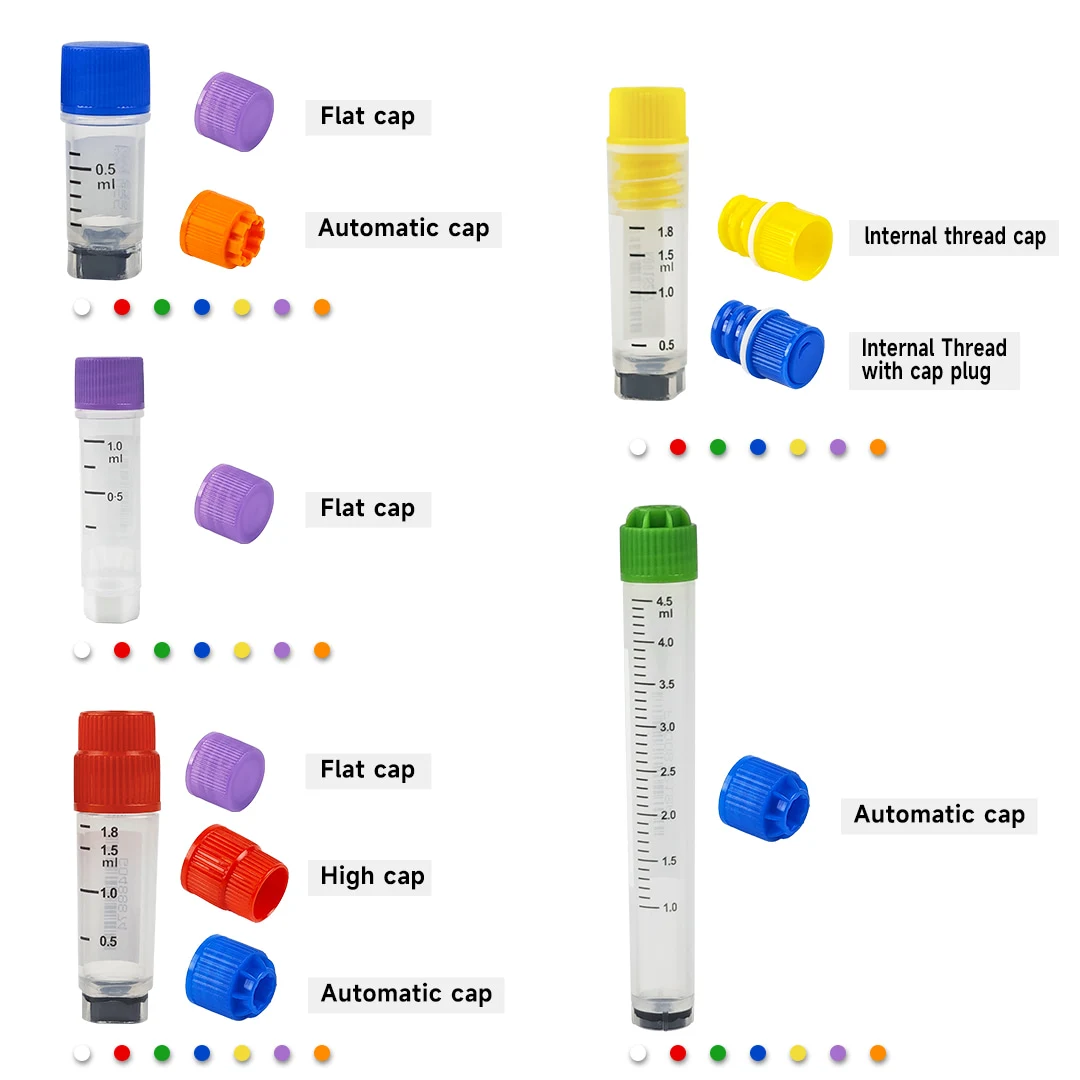
In the fast-evolving world of gene therapy and regenerative medicine, accurate sample identification and traceability are paramount to successful research and clinical applications. Laboratory cryogenic tubes featuring integrated barcode, QR code, and laser-etched data matrix systems provide a sophisticated 3-in-1 coding approach that addresses these needs. This innovation from leading cryogenic vials manufacturers enables automated and error-resistant tracking throughout sample handling processes, reducing human error and improving workflow efficiency. The unique identification codes ensure reliable data capture during cryogenic storage and transfer, facilitating seamless integration with laboratory information management systems (LIMS). This is crucial when managing gene therapy vectors or CAR-T cell products, where sample misidentification can lead to costly errors or compromised patient safety. Additionally, color-coded vials and screw-cap designs enhance sample organization and minimize contamination risks. Together, these features help maintain chain-of-custody standards while supporting regulatory compliance, positioning laboratory cryogenic tubes as essential tools in the precision-driven domain of advanced therapeutics.
The quality and sterility of laboratory cryogenic tubes cannot be overstated when dealing with regenerative medicine samples of immense clinical value. A reputable cryogenic vials manufacturer operates within ISO Class 8 cleanroom conditions, employing strict quality control protocols and E-beam sterilization at 15kGy to ensure the vials are free from DNase, RNase, endotoxins, and pyrogens. These rigorous measures guarantee that the containers do not introduce contaminants or pathogens during long-term storage, a critical concern for biologics such as vaccines, enzymes, and cell therapies. Compliance with international standards such as ISO 9001, ISO 13485, CE marking, and IATA PI 650 for leak-proof performance assures end-users of both safety and reliability. The manufacturing process includes comprehensive testing at negative pressures to validate seal integrity, essential for preventing contamination or sample loss in ultra-low temperature environments. Packaging options that protect vial sterility further enhance the usability and consistent performance expected from laboratory cryogenic tubes designed for advanced biobanking and regenerative medicine applications. For example, AMNGENT Cryogenic Vials by Zhejiang Rongda Biotechnology Co., Ltd. exemplify these standards with 2D coding, medical-grade materials, and compatibility with cGMP workflows.
Selecting laboratory cryogenic tubes from a cryogenic vials manufacturer that prioritizes robust material performance, advanced traceability, and stringent sterility protocols significantly reduces uncertainty in sample storage workflows. These vials offer a dependable storage solution that safeguards stem cells and gene therapy materials through severe temperature cycles and handling processes. With thoughtfully engineered designs that fit seamlessly into existing laboratory systems, the tubes also provide practical ease of use, supporting meticulous organization with color-coded and clearly labeled options.


